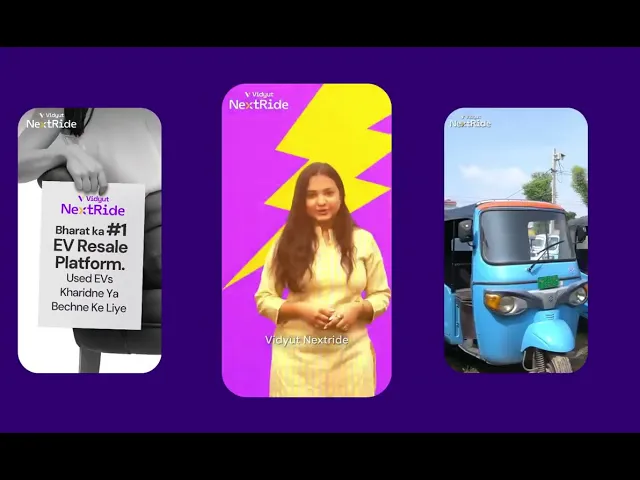

Develop a well-rounded understanding of the second-hand EV user to inform the brand direction.
Vidyut, an EV fintech, wanted to gain clarity on users’ experiences with second-hand vehicles to ground the branding exercise in real insights rather than assumptions. This meant going deep into users’ perceptions, motivations, and unmet needs.
PROJECT OVERVIEW
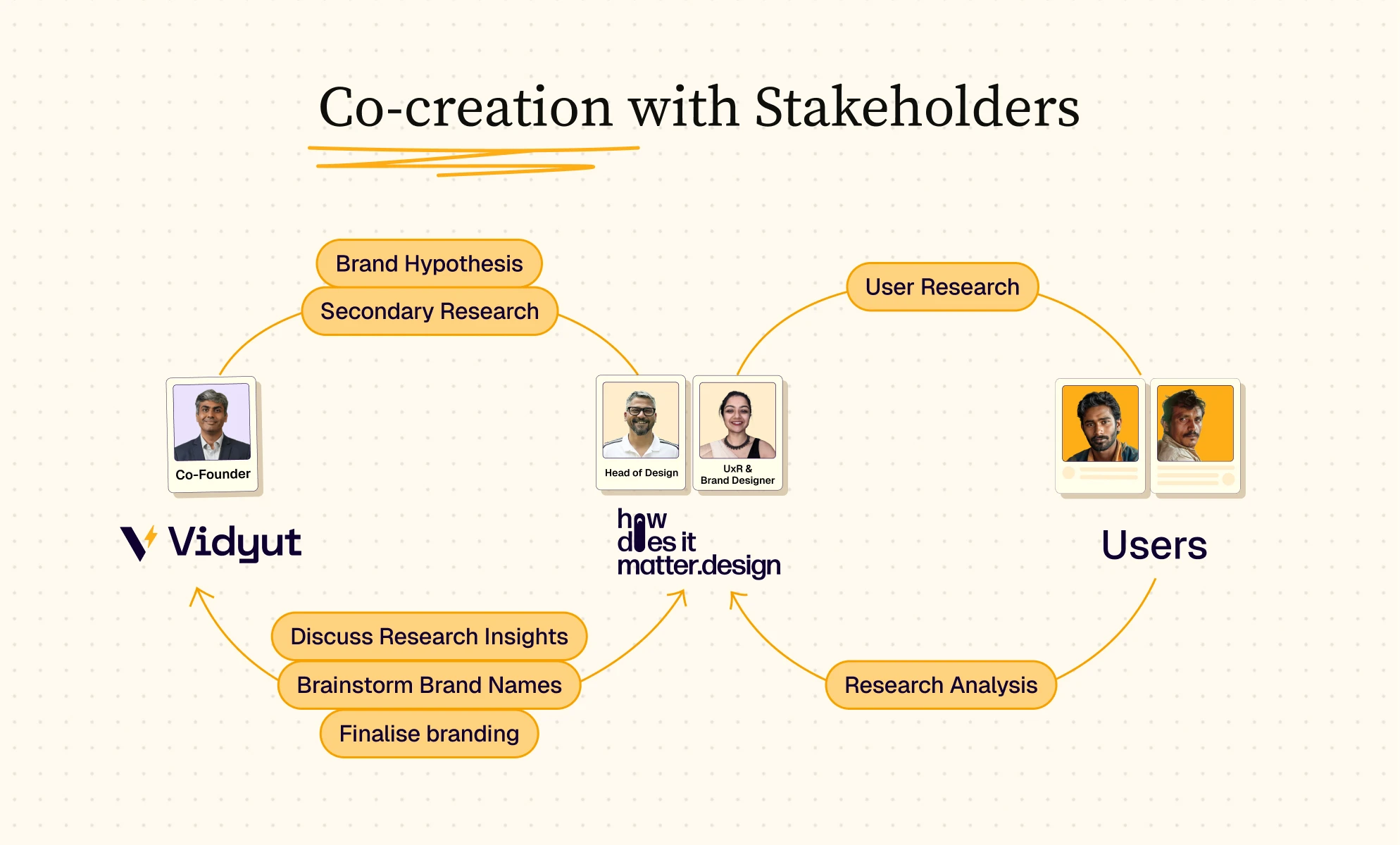
Over 3 months (Jul–Sep 2024), we conducted 12 telephonic interviews with people who had recently purchased second-hand commercial EVs. The ultimate goal was to decide a brand name and a logo for this new vertical that integrated into Vidyut’s existing brand identity.
Research Planning: Formulated a research plan within defined time and resource constraints.
User Research: Conducted user research to understand the intended users—their needs, pain points, and perceptions of “second-hand”—to ground the brand design process in user insights.
Research Synthesis: Synthesised findings through affinity mapping, user personas, and journey maps.
Stakeholder Communication: Shared key research insights and implications with stakeholders to align on direction.
Logo Design: Designed the logo aligned with validated brand positioning and user insights.
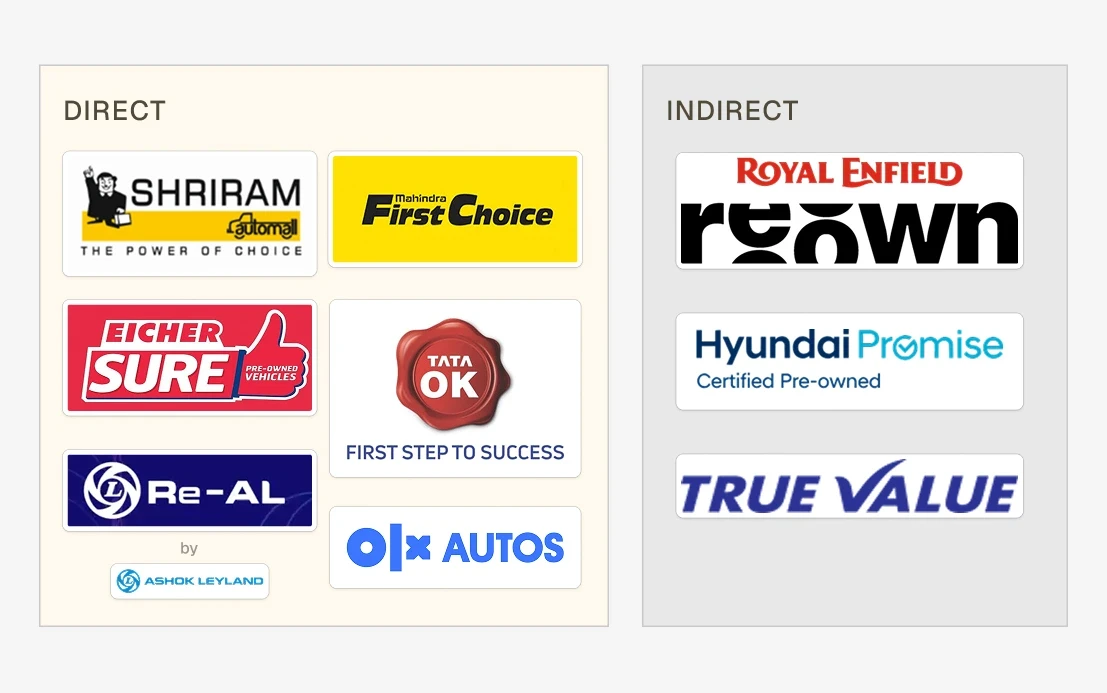
We took an overview of direct and indirect competitors to understand the broader ecosystem around second-hand vehicles.
We conducted telephonic, semi-structured interviews with recent second-hand commercial EV owners, to understand their expectations, behaviours, and unmet needs beyond what secondary research could reveal.
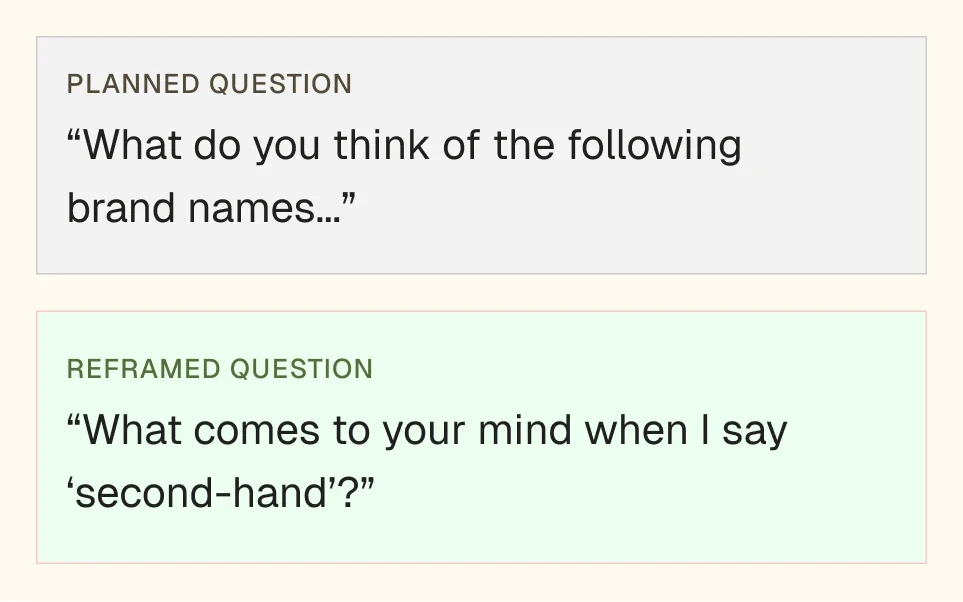
INTERVIEW EXPERIENCE
Guided by a clear framework, we adapted questions to meet users where they were, ensuring real experiences weren’t lost due to unclear phrasing.
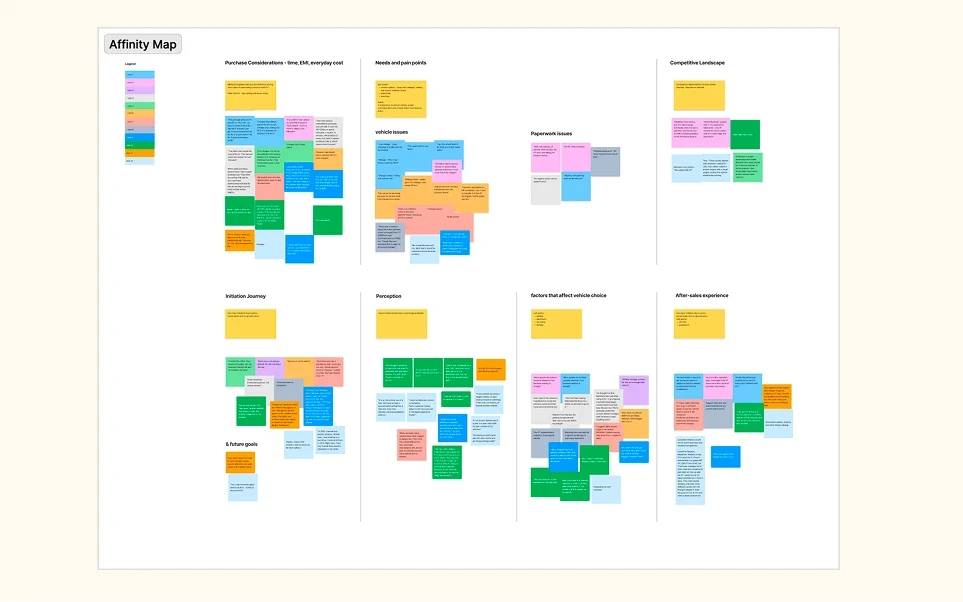
Interview findings were synthesised through affinity mapping to identify recurring themes across needs, pain points, and perceptions. These patterns were translated into user personas. They helped clarify decision drivers, friction points, and opportunities for differentiation.
Speaking to our users made it clear how personal and high-stakes these decisions are. Every delay, repair, or promise broken affected someone’s daily income. Sharing these stories directly with the founder helped ground the company’s strategy in reality.
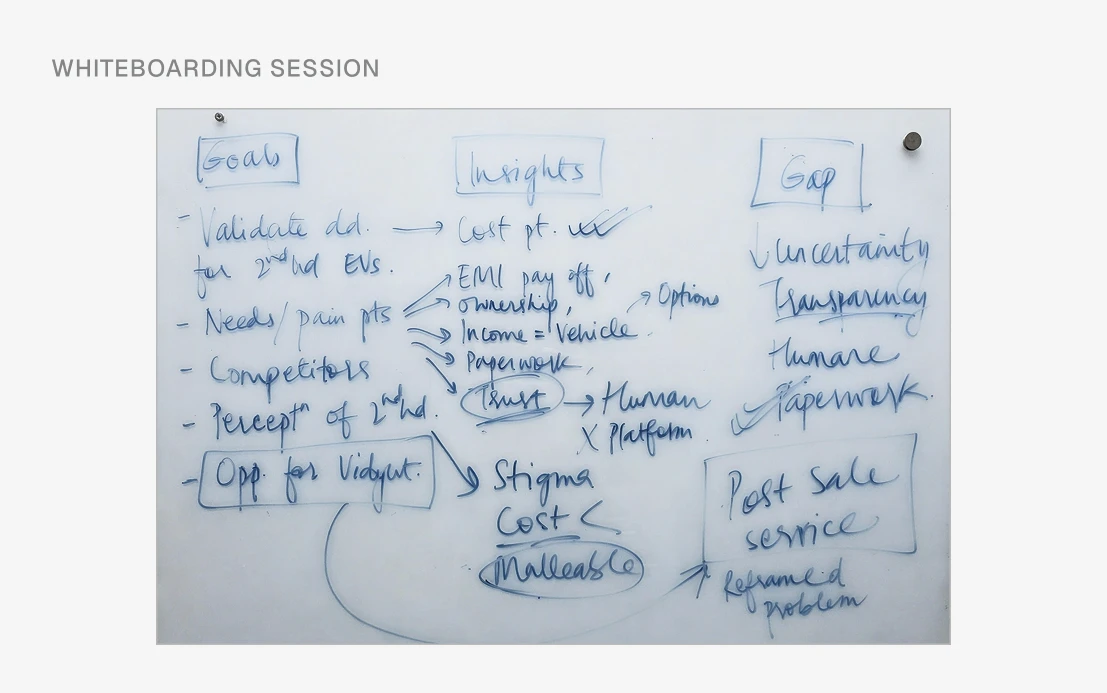
Early on, we assumed price and trust would drive second-hand EV adoption. Research showed that while affordability was a key decision factor, transparency and post-sale support shaped long-term satisfaction. Interestingly, a strong sense of ownership also emerged as a key motivation.
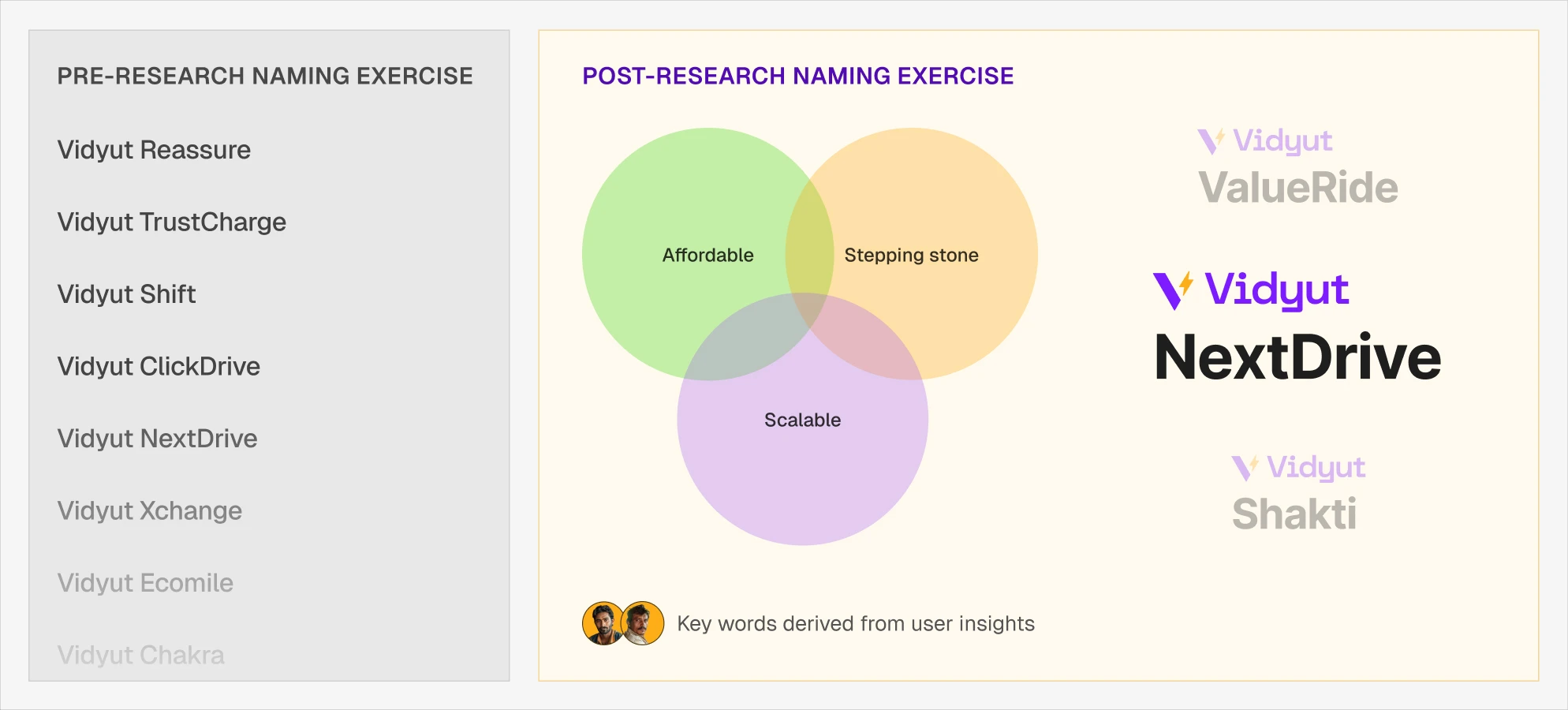
Assumptions need pressure-testing
Our early hypotheses around trust and cost-effectiveness as primary factors for EV adoption changed once we heard real user stories in detail.
Stay flexible in the field
Adapting interview direction in real time led to clearer, more meaningful insights.