Design system

Design system

Design system

Design system

Bringing order to a rapidly scaling product

Bringing order to a rapidly scaling product

Bringing order to a rapidly scaling product

A mockup for a Macbook place on a table for a hair salon website

Client

The Arc

Client

The Arc

My Role

Lead Product Designer

My Role

Lead Product Designer

Timeline

1 month (Sep-Oct 2024)

Timeline

1 month (Sep-Oct 2024)

Our Team

2 Product Designers, Head of Design & I

Our Team

2 Product Designers, Head of Design & I

BRIEF

BRIEF

Build a design system before the next development cycle i.e. one month. 

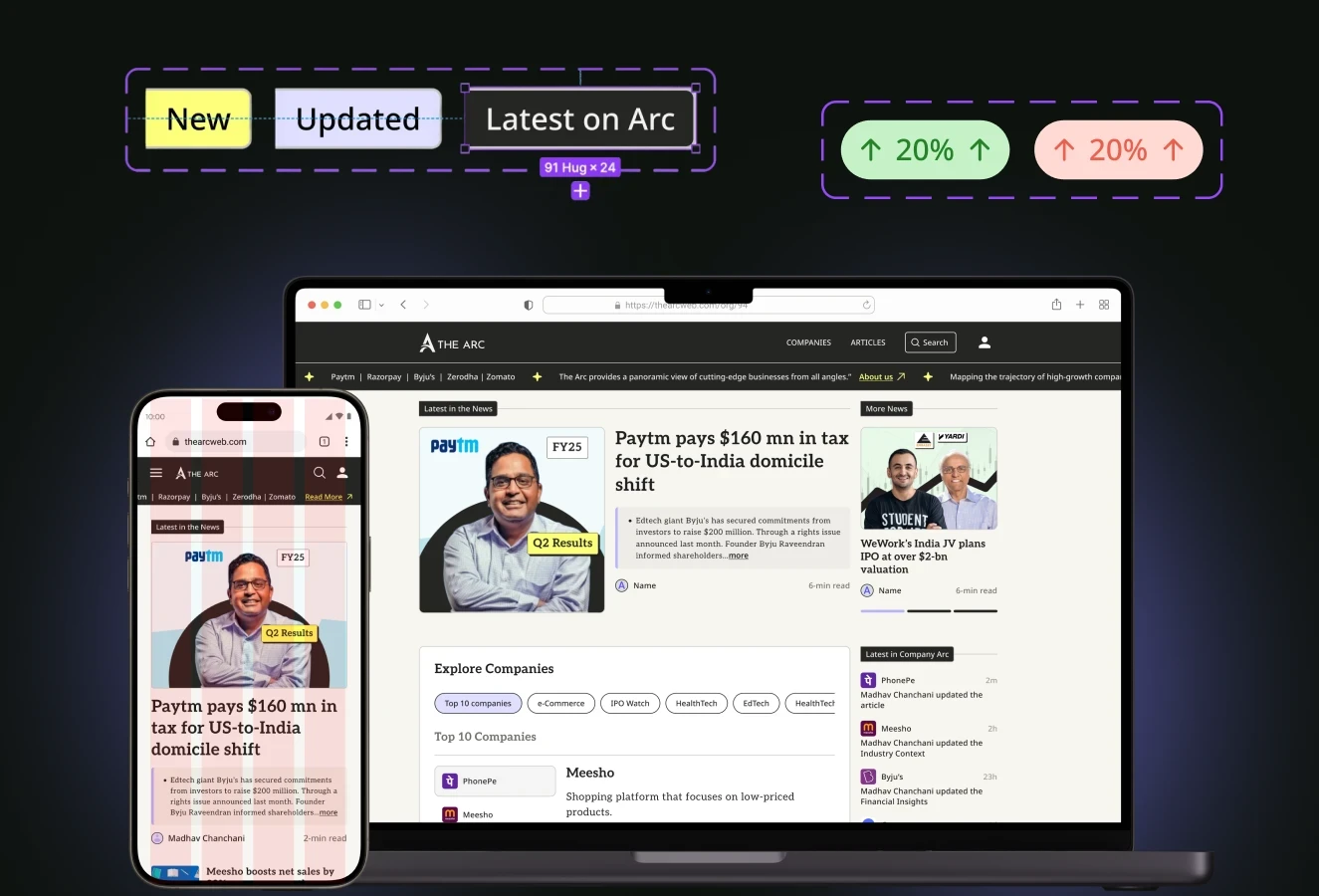
Nine months into scaling, The Arc, a news media startup focused on India’s high-growth companies, began facing growing UI inconsistencies and slower iteration cycles. Engineering had already invested heavily in custom components, which ruled out adopting an off-the-shelf design system.

PROJECT OVERVIEW

We designed and shipped 500+ components & set guidelines for the future, improved consistency across the product, and reduced design and tech debt.
  • Design System Research: Reviewed 4 mature design systems (Uber, Atlassian, Mosaic Wellness, Google) to understand best practices for file organisation, component hierarchy, and documentation.

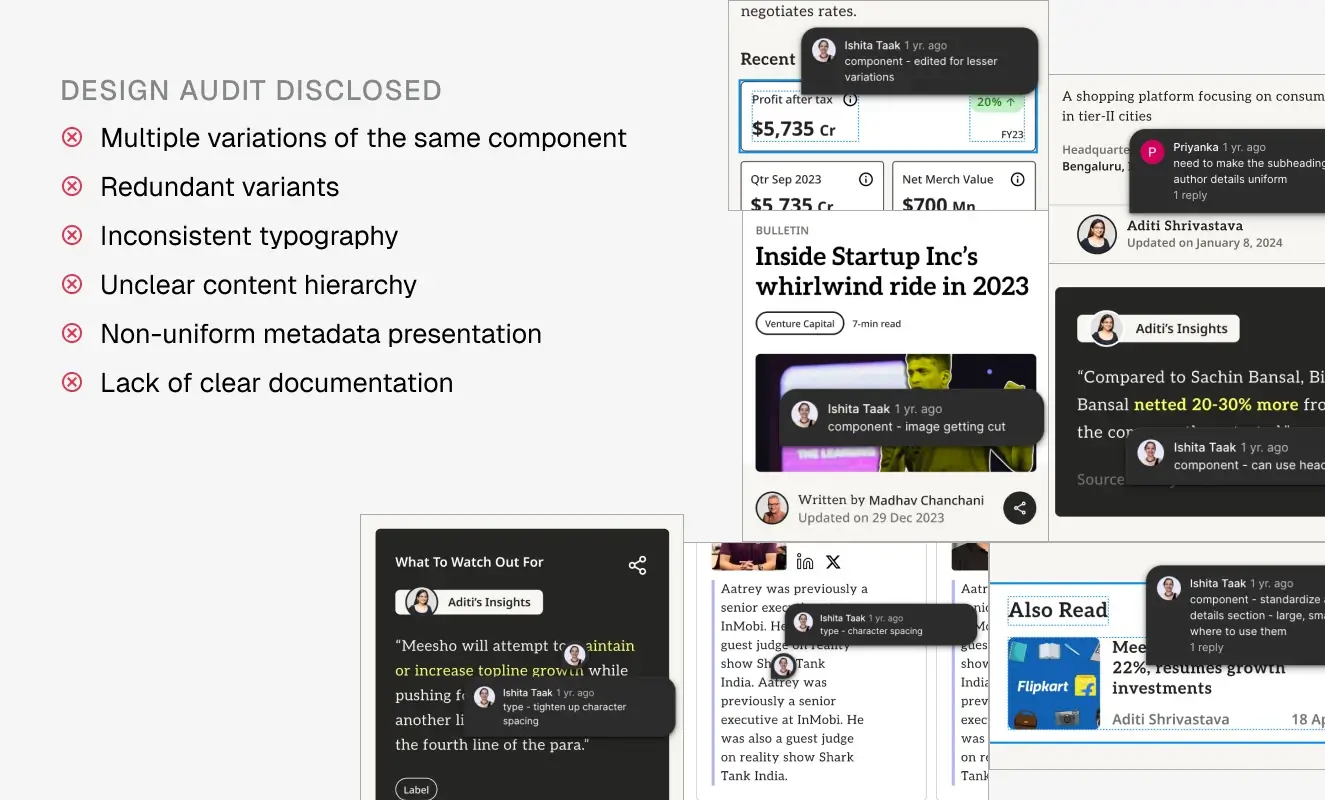
  • UI Audit & Gap Analysis: Audited existing screens to identify visual inconsistencies and redundancies such as duplicate fonts, spacing issues, and unaccounted icons.

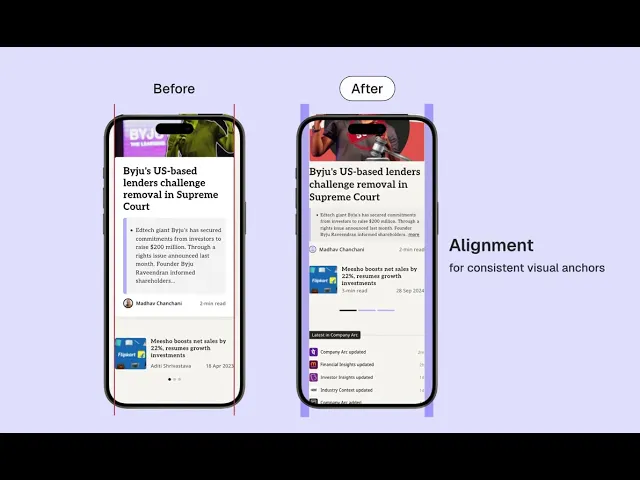
  • Foundation Setup: Defined system guidelines for spacing and grids, colour usage, iconography, and a scalable type system.

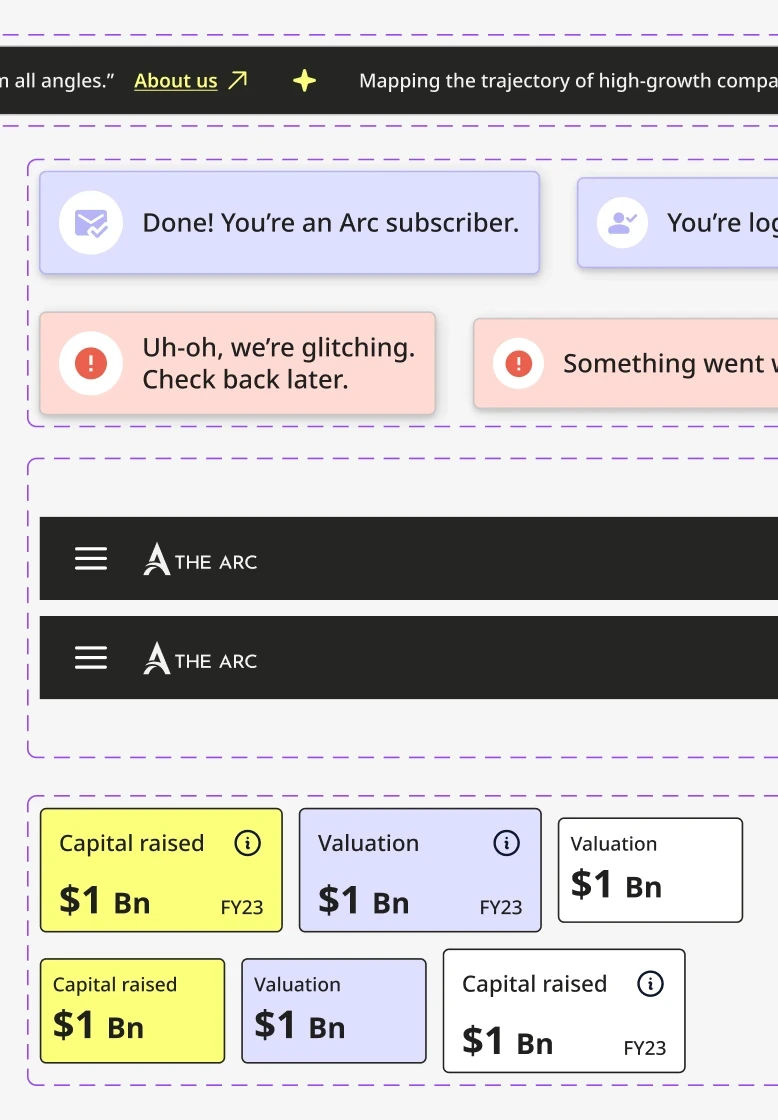
  • Component Consolidation: Compiled components across pages and organised them into atoms, molecules, and organisms to improve reusability.

  • System Assembly & Handoff: Structured a developer-friendly component library to support faster MVP builds and consistent future iterations.
A two screens from the hair salon website

Audited the MVP to catch inconsistencies, duplicates, and component variations. Simultaneously, we segregated the issues into buckets to make it easier for the designers to know what to pick up next.

Audited the MVP to catch inconsistencies, duplicates, and component variations. Simultaneously, we segregated the issues into buckets to make it easier for the designers to know what to pick up next.

A mockup of a Macbook for the about us page of the hair salon website

COMPONENT COLLATION

COMPONENT COLLATION

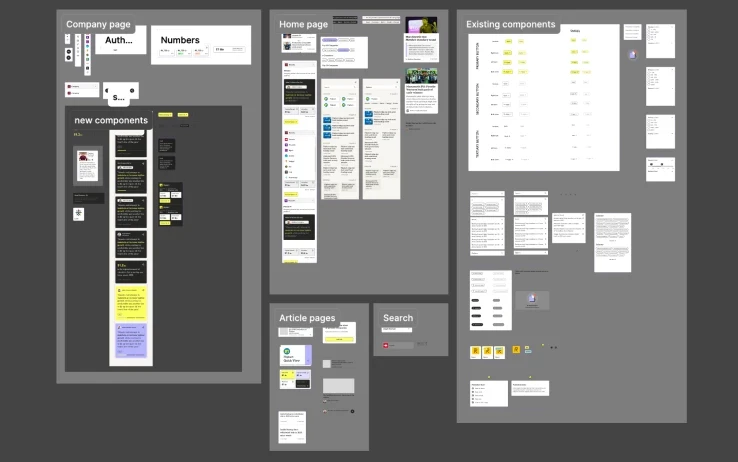
We collated all components across the MVP to understand the scope of the project.

Components were pulled from mobile and desktop. Working at an MVP stage meant the system was still contained, allowing us to set aside existing components and clearly assess what needed refinement, consolidation, or removal.

Components were pulled from mobile and desktop. Working at an MVP stage meant the system was still contained, allowing us to set aside existing components and clearly assess what needed refinement, consolidation, or removal.

Components were pulled from mobile and desktop. Working at an MVP stage meant the system was still contained, allowing us to set aside existing components and clearly assess what needed refinement, consolidation, or removal.

IMPLEMENTING ATOMIC DESIGN

IMPLEMENTING ATOMIC DESIGN

To fix consistency-related issues discovered in the audit, we segregated the collated components into atoms, molecules and organisms, set guidelines, and documented everything .
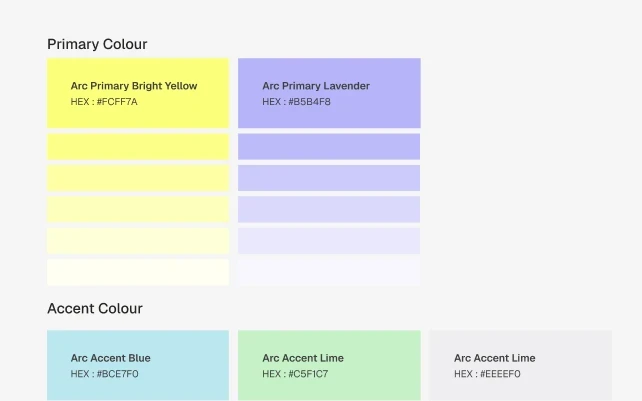
COLOR PALETTE

The existing color palette was retained since it worked well. However, we extended it with additional variations to give more variety for UI and graphic creation across the product.
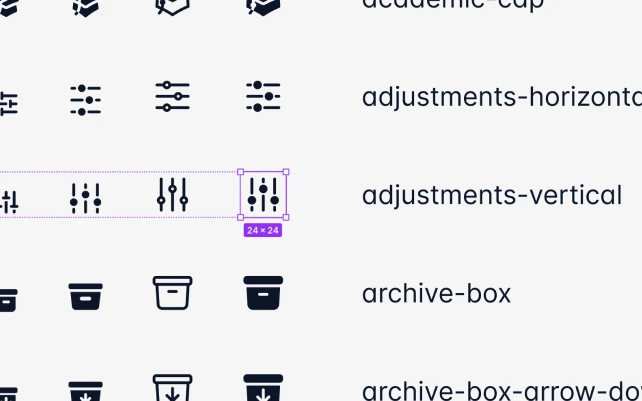
ICON SYSTEM

ICON SYSTEM

We leveraged 'Hero Icons' library as a base to save time, which supported multiple icon sizes and styles through micro, mini, outline, and solid variants.

BUILDING THE TYPE SCALE

BUILDING THE TYPE SCALE

We derived the type scale by deconstructing live MVP screens, identifying text patterns, removing redundant styles, and standardising the remaining ones into justified, tokenised roles.
ACCESSIBILITY CHECK

ACCESSIBILITY CHECK

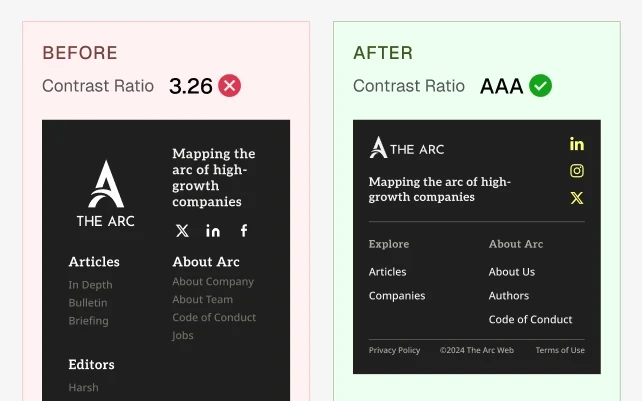
Accessibility guided decisions around hierarchy, touch targets and color contrast. For example, secondary text in the footer was refined to improve readability on dark backgrounds. Making these changes at the component level ensured they scaled consistently across the product.
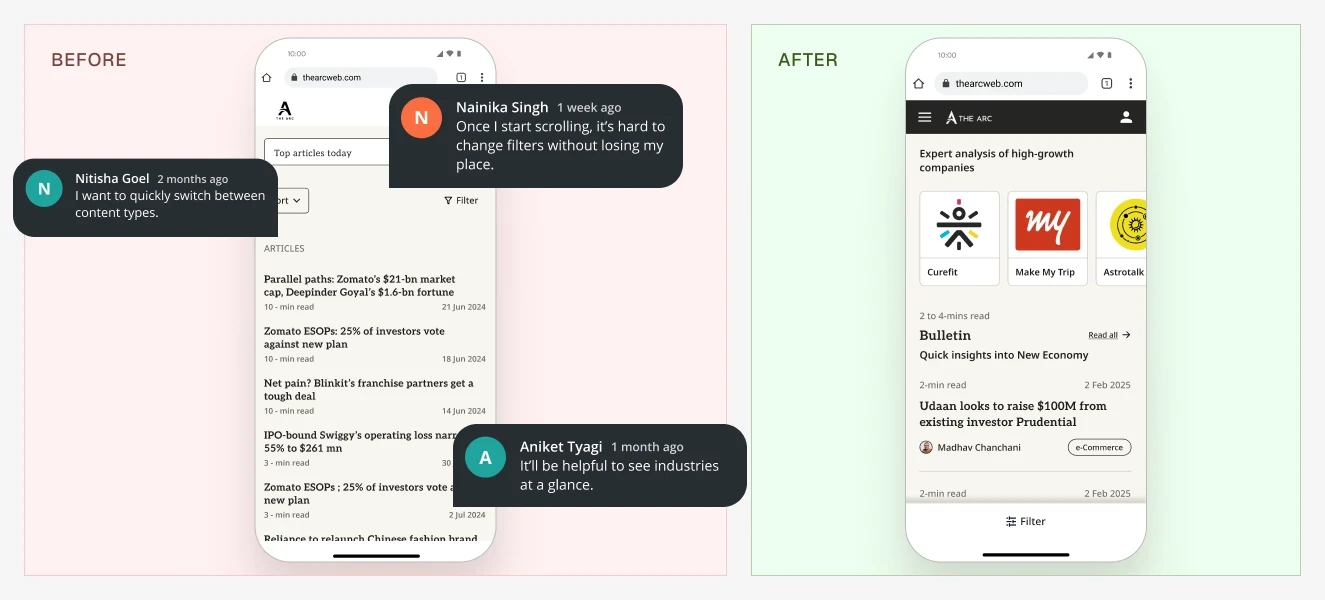
After issues with consistency, to fix UX issues, we tackled user feedback reported to the founders.

After issues with consistency, to fix UX issues, we tackled user feedback reported to the founders.

After issues with consistency, to fix UX issues, we tackled user feedback reported to the founders.

After issues with consistency, to fix UX issues, we tackled user feedback reported to the founders.

After issues with consistency, to fix UX issues, we tackled user feedback reported to the founders.

IMPACT

IMPACT

Design & Ship Faster

A shared system meant small changes didn’t snowball, helping teams move faster with less friction.

Reduced Design and Tech Debt

Fixing small inconsistencies early prevented them from turning into larger problems later.

Create a free website with Framer, the website builder loved by startups, designers and agencies.